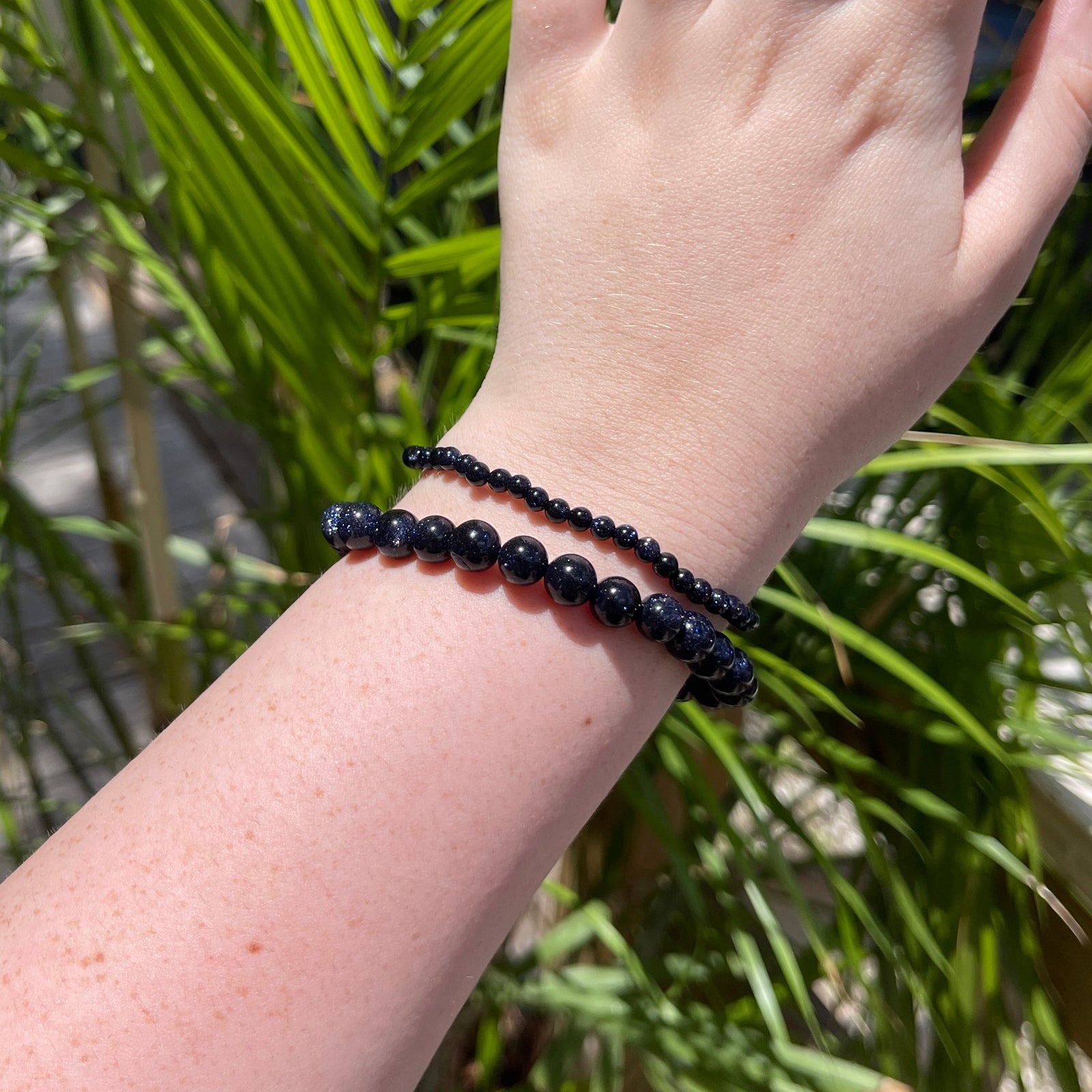



















The sparkly one. The story is older than you'd think.
Goldstone is not a stone. It's glass, infused with copper flakes, and the copper is what gives it the shimmer. The story goes that monks in 17th-century Italy stumbled into the technique while trying to make gold, and what they ended up with was this. A piece of failed alchemy that turned into its own thing.
We stock it for a few reasons. It's beautiful. It's affordable. Kids love it. The copper inside it is real, and copper has its own long history in metaphysical practice as a conductor and an amplifier. And there is something to be said for an object that started as a person trying to make magic and ended up as a sparkling brown stone you can hold in your hand.
If you're looking for a stone the earth made, Goldstone is not it, and I'd point you toward tigers eye or pyrite instead. If you're looking for something with a story, a wink, and a piece of copper inside it, this is a good one.
Physical Properties
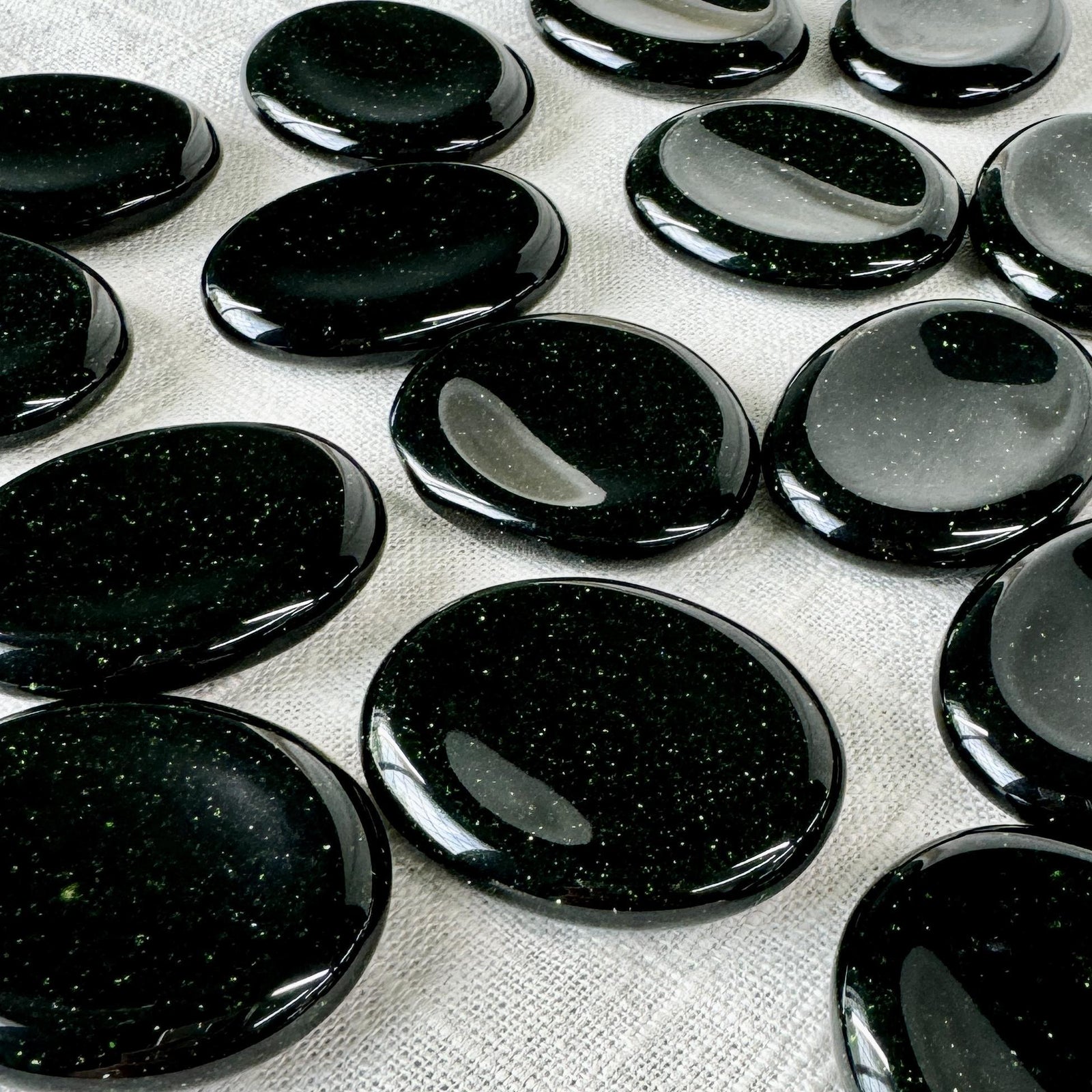
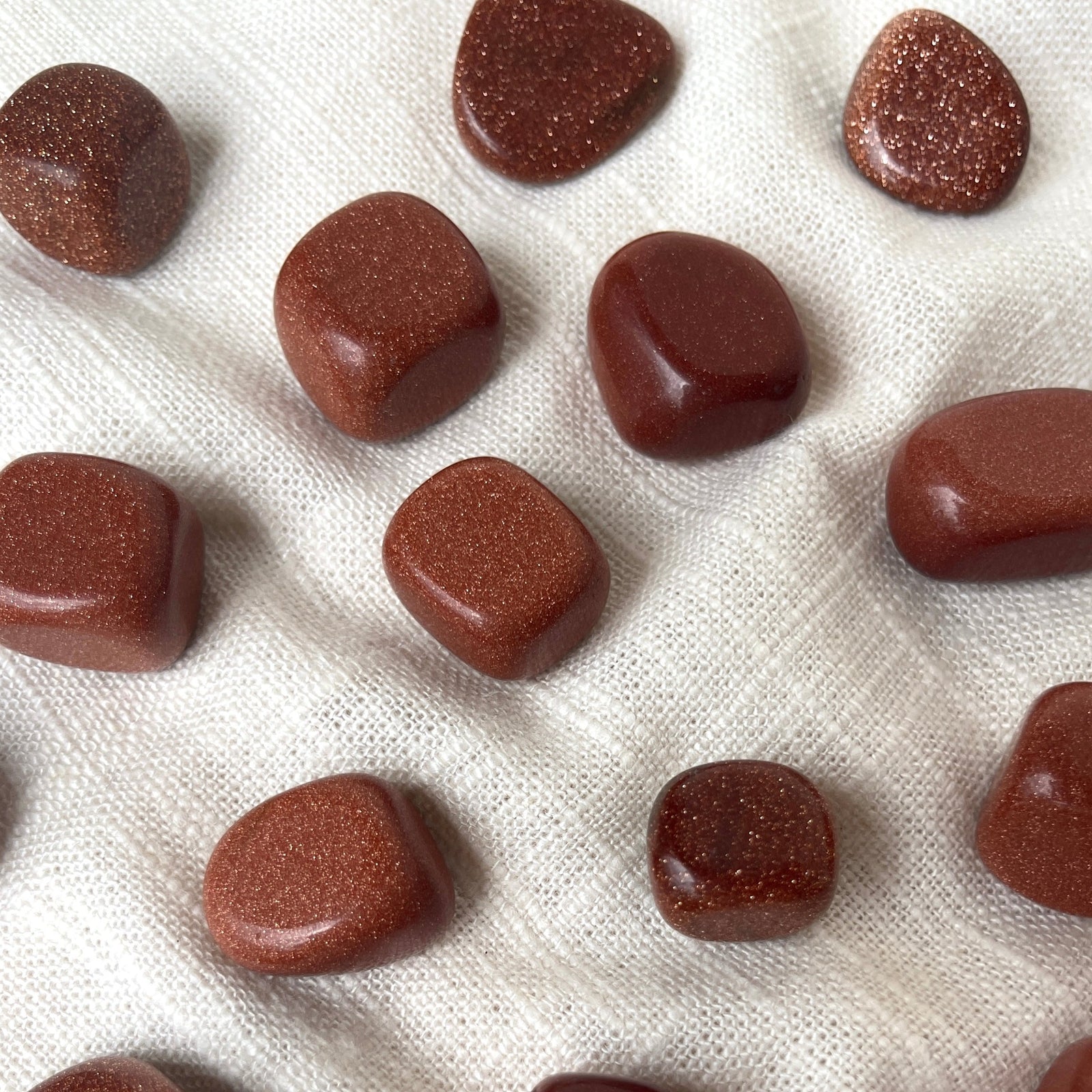
Appearance: Deep reddish-brown (the classic), midnight blue (Blue Goldstone), or forest green (Green Goldstone), each with fine flecks of copper suspended throughout. Catches light like the night sky. Highly uniform between pieces compared to natural stones, because it's made.
Composition: Glass with copper particles fused into it. The classic brown version uses copper salts to color the glass. Blue Goldstone uses cobalt or manganese for the base color with copper flecks. Green Goldstone uses chromium oxides with copper flecks. All three are the same family of manmade material.
Hardness: 5.5 to 6 on the Mohs scale. Durable enough for daily-wear jewelry. Won't scratch in a pocket, but a hard impact will chip it like any glass piece.
Origin: The technique originated in Venice, Italy, around the 17th century. Often attributed to the Miotti family of glassmakers, though the legend assigns it to monks. Most Goldstone on the market today is manufactured in India and China.
Metaphysical Properties (the tradition)
What people use it for: Goldstone has built up a tradition around ambition, manifestation, and the courage to chase a goal. The reasoning in the community is that the copper inside the glass acts as an energetic conductor, the same way copper conducts electricity. Whether you take that literally or symbolically, the tradition is real and the stone has been used this way for a long time.
Where it tends to show up: Manifestation work, vision-boarding, the moment you commit to a goal out loud, work that requires confidence you don't quite feel yet. People reach for it when they want a physical reminder of what they're building.
By color:
- Classic (brown): ambition, vitality, the warm grounded version
- Blue Goldstone: uplift, hope, communication, the version people pair with Throat or Third Eye work
- Green Goldstone: prosperity, growth, the version pulled for Heart Chakra or money work
Chakras (traditional associations): Brown to Root, Blue to Throat or Third Eye, Green to Heart. Not the primary reason to pick it up, but worth knowing.
How to Use Goldstone
In your pocket: A tumble in the pocket is the most common use. Small, durable, easy to forget you're carrying it until you reach for it.
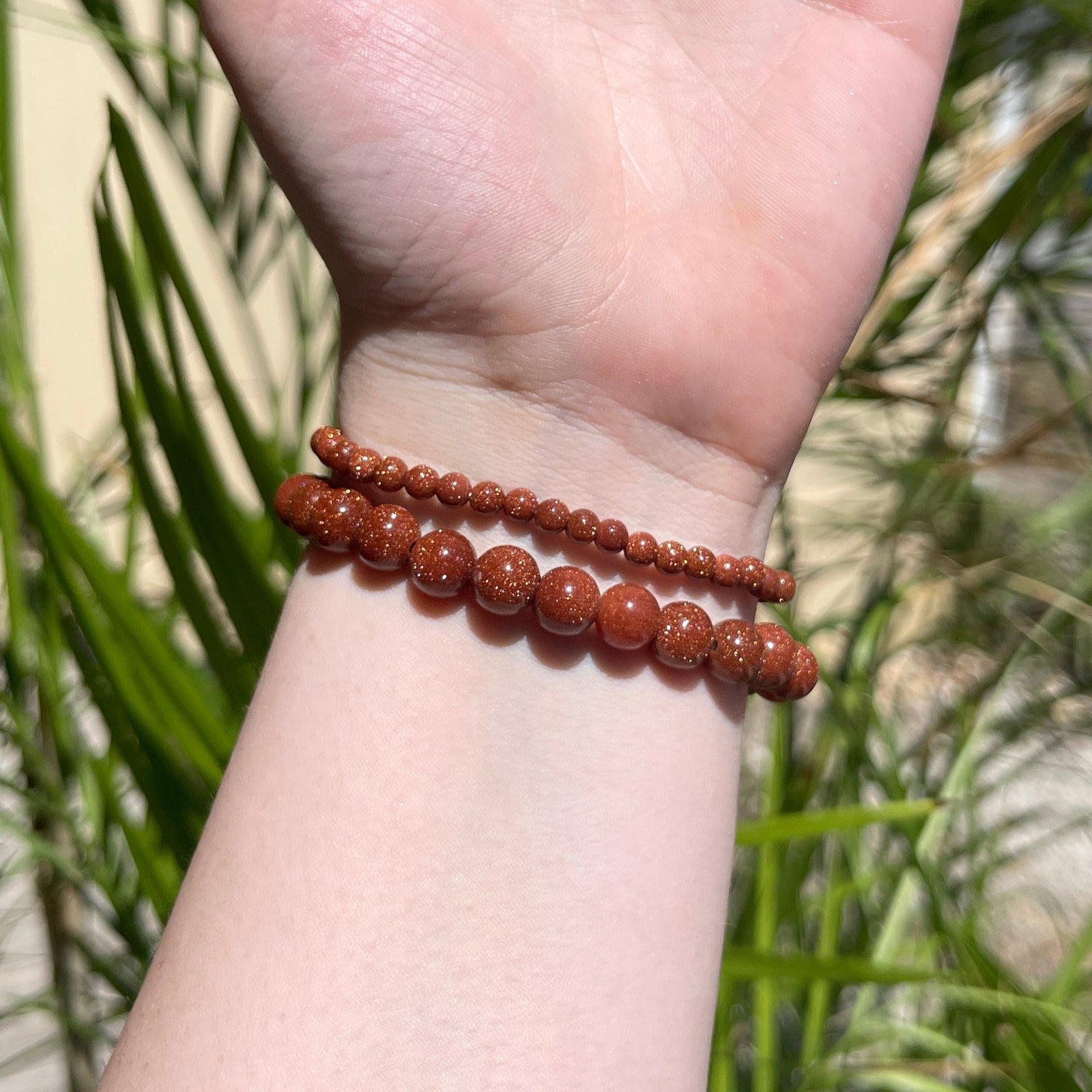
As jewelry: Bracelets are the sweet spot. Goldstone holds up to daily wear better than most natural stones. The sparkle reads as elegant on a wrist, and the price point makes it accessible.
On a desk or altar: A tumble or small piece on the desk works as a quiet anchor for the project you're working toward. Pairs visually with anything warm or metallic.
For kids: Goldstone is one of the few crystals I recommend without hesitation for children. It's durable, the sparkle is captivating, and the price means it's no tragedy if it gets lost.
Crystal pairings:
- Citrine for manifestation and abundance work
- Tiger's Eye for confidence and follow-through
- Black Onyx or Black Tourmaline if you want a protective grounding piece alongside
- Carnelian for creativity and momentum
Care and Maintenance
Cleansing: Smoke, sound, or moonlight. Water is fine on Goldstone (it's glass), but a soft cloth wipe is usually all it needs to look clean.
Charging: Sunlight or moonlight both work. The glass doesn't fade.
Storage: Keep it away from harder stones that could scratch the surface or chip it on impact. A soft pouch is plenty.
Shopping Guide
Picking a piece: Goldstone is one of the few pieces where consistency between samples is high, since it's manufactured. Pick the color that pulls you - brown, blue, or green - and don't overthink the individual piece.
For tumbles: Look for clean, polished surfaces and an even distribution of copper flecks. Avoid pieces with visible bubbles or cloudy zones in the glass.
For bracelets: This is where Goldstone earns its keep. The 8mm and 10mm bead sizes have the most visual impact. Daily wear holds up well.
On sourcing: Goldstone is typically manufactured in India or China. Quality varies between batches, so we hand-select pieces that show good color saturation and clean copper distribution.
A few good pieces from the shop, if you're looking:
- Goldstone Tumble - the classic brown, pocket size
- Blue Goldstone Calming Stone - smooth and palm-friendly
- Green Goldstone Calming Stone - the heart-and-prosperity version
- Goldstone Crystal Bracelet - daily-wear bracelet in multiple sizes
- Blue Goldstone Crystal Bracelet - same in midnight blue
One small thing to try tonight
Pick up a piece of Goldstone (or anything with sparkle to it) and hold it under a lamp.
Tilt it slowly. Watch the light catch the copper.
Then say out loud the thing you're working toward. Not a wish. The actual thing.
That's it. The stone isn't doing the work. You are. The stone is just the witness.