


















The stone for the day your shoulders are up by your ears.
The first thing most people notice about lepidolite is the color. A soft lavender, sometimes with pink running through it, sometimes more silver or grey at the edges. The second thing they notice is the texture. Layers. Tiny mica flakes that catch light in a way that does not feel like a regular stone.
The third thing, which takes a little longer, is the feeling in the hand. Lepidolite is a lithium-bearing mineral. The same element that, in much higher and pharmaceutical concentrations, has steadied people through some of the worst seasons of their lives. The stone is not medicine. But the body recognizes something, and the shoulders drop a little.
This is the one people pick up when their nervous system is loud. When the head is full of laps around the same thought. When the day has been a lot.
Physical Properties
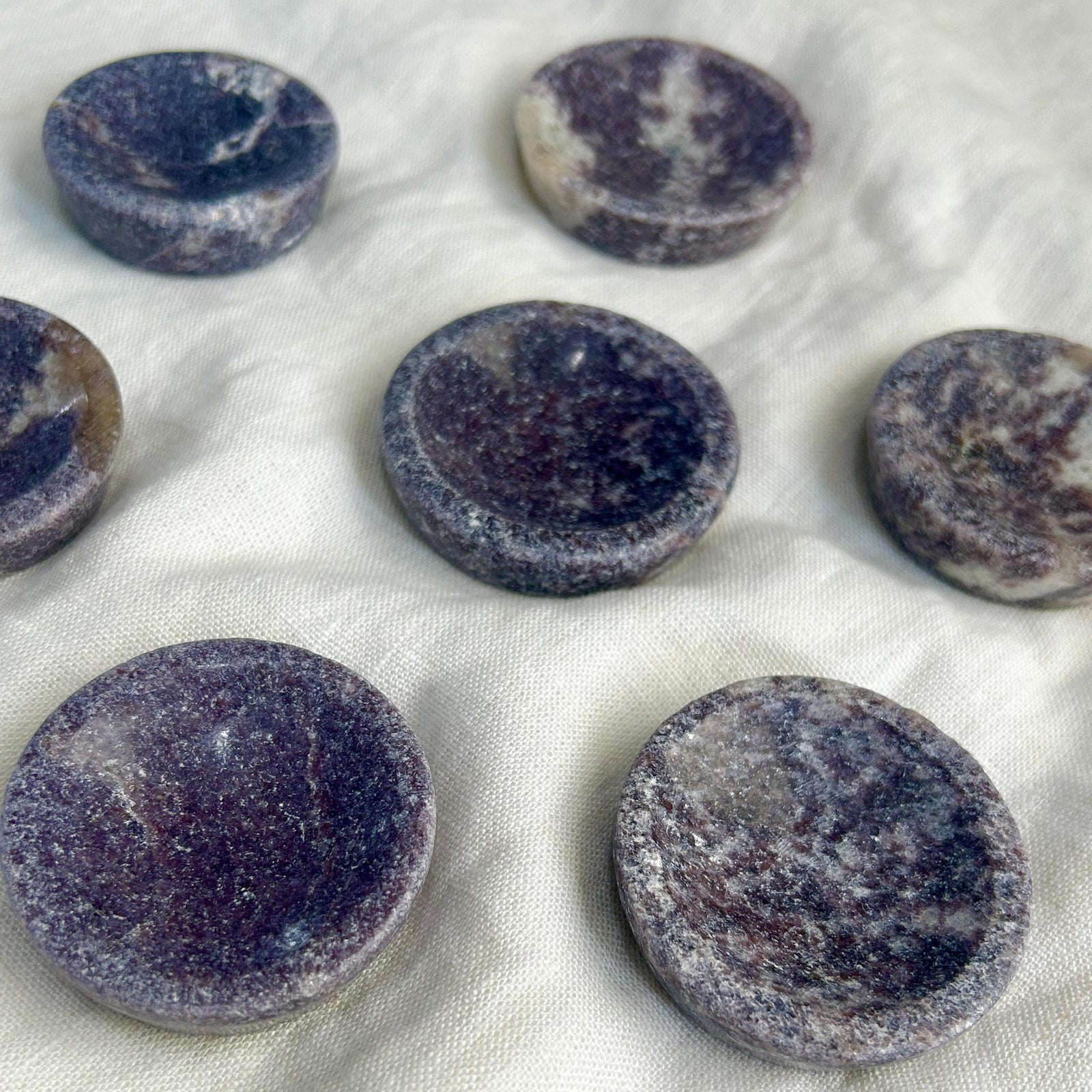
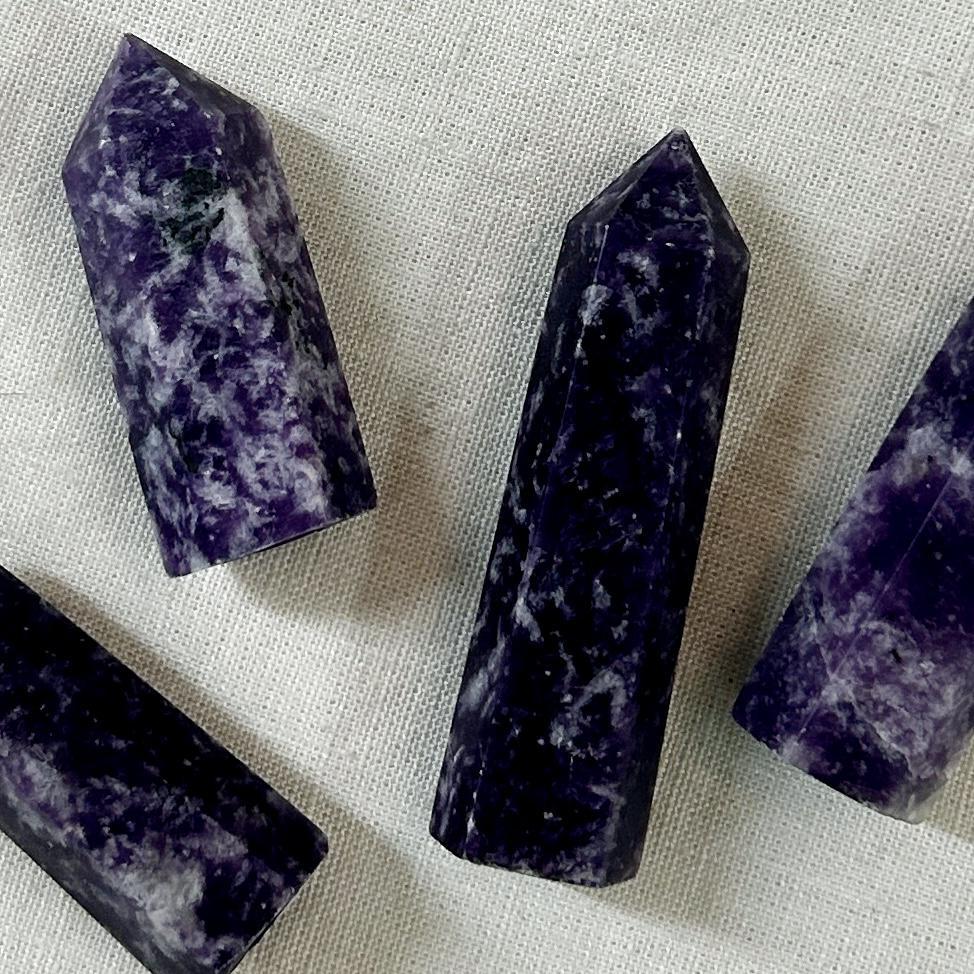
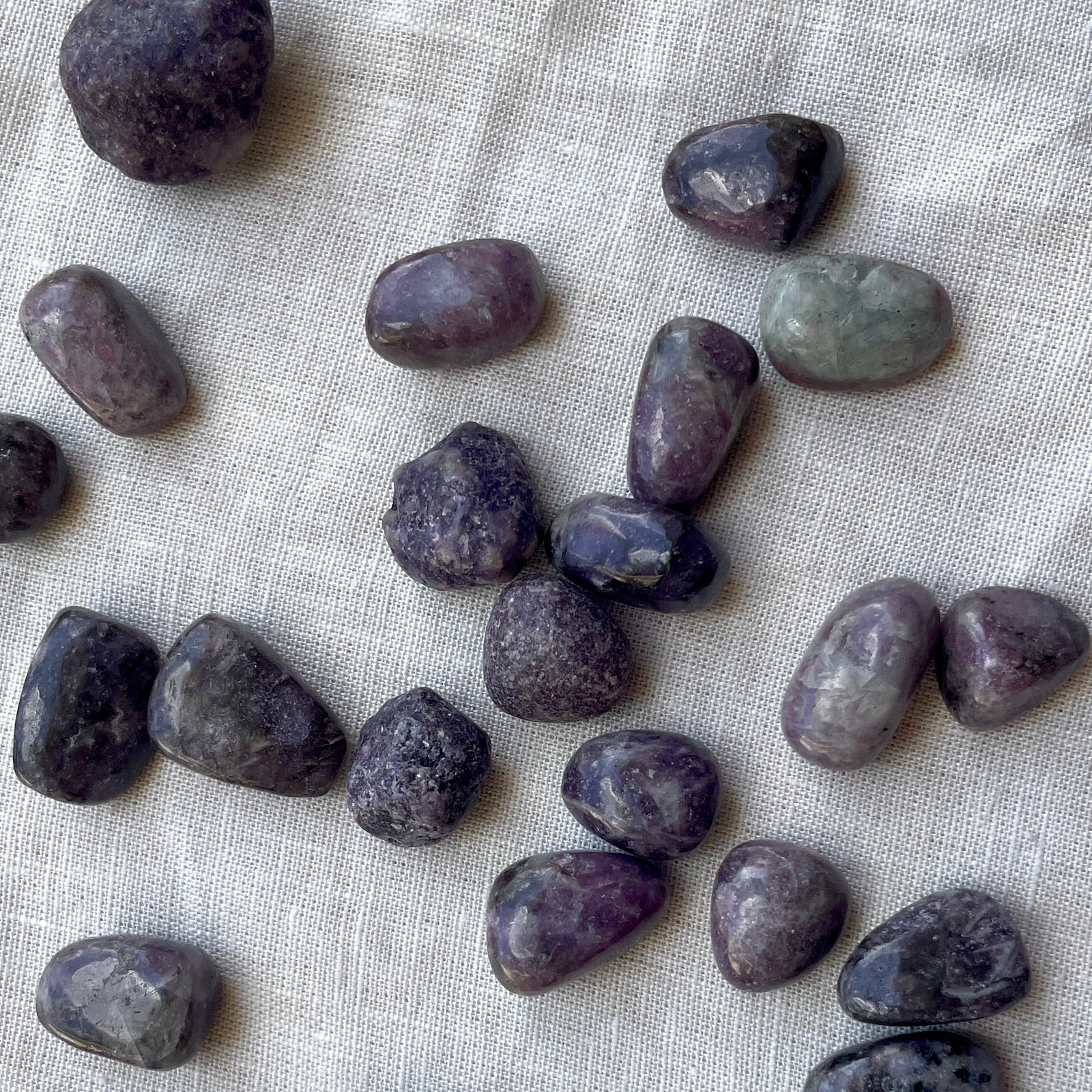
- Appearance: Layered, micaceous, often in shades of lavender, lilac, pink, or silvery grey. Some pieces show pale green or a deeper purple. The surface tends to shimmer or flash where mica plates catch light. Tumbles and polished shapes show smoother color zones, raw pieces show the flakes.
- Composition: A lithium-rich mica. Part of the same family as muscovite, with lithium replacing some of the other elements in the structure. The lithium content is what makes lepidolite specifically lepidolite, not just a pretty purple mica.
- Hardness: 2.5 to 4 on the Mohs scale. Soft. The layers can flake or chip if a piece is dropped on a hard surface, so it is a stone for displaying, holding gently, or wearing as polished jewelry, not for keys-in-pocket carry.
- Origin: Typically mined in Brazil, Madagascar, the United States (notably California and Maine), Russia, and parts of Africa. The lavender purple pieces most people picture when they hear "lepidolite" tend to come from Brazil.
Metaphysical Properties
- What it does: Lepidolite is the calming stone. The one reached for during anxiety, during grief, during the kind of grinding stress that has nowhere to land. It is associated with emotional steadiness, transition periods, and learning how to sit with hard feelings without trying to outrun them.
- Where it is useful: Sleep struggles. Big life transitions, especially the ones with no clean ending. Hormonal shifts. Difficult conversations. The aftermath of a hard week. Anxiety that lives in the body before the brain catches up.
- Chakras: Most often associated with the heart and the third eye, sometimes the crown. The lithium signature is what makes it feel like a whole-system stone rather than a single chakra one.
- One honest note: Lepidolite is a support, not a treatment. If anxiety or depression is the season you are in, the stone can sit alongside the actual care, the conversations, the rest, the medicine if it is needed. It is a physical anchor for a decision to slow down. Nothing more. Nothing less.
How to Use Lepidolite
- In your pocket or under the pillow. A small polished piece tucked into a pocket on a hard day, or slipped under a pillow at night, gives the hand something to find. The body remembers where it is.
- On the bedside table. A sphere, a tower, or a small palm stone on the table next to the bed. A visual cue that the bed is for rest, not for scrolling.
- In meditation. Held in the palm or set on the chest while lying down. The weight is the reminder. Slow the breath, count down from ten, let the shoulders drop on each exhale.
- For intention work. Lepidolite pairs well with intentions about boundaries, slowing down, choosing softness, releasing what is not yours to carry.
- In a grid. As the calming center of a grid focused on rest, anxiety relief, or transition. Surround with rose quartz for tenderness, clear quartz for amplification, smoky quartz for releasing what is heavy.
- Crystal pairings: Rose quartz for emotional softness. Amethyst for sleep and intuition. Clear quartz to amplify the calming effect. Black tourmaline for grounding when the lepidolite has slowed the racing mind enough to land. Selenite to keep both the lepidolite and the room clear.
Care and Maintenance
- Cleansing: No water. Lepidolite is soft and layered, and water will damage the surface over time, especially salt water. Cleanse with sage or palo santo smoke, sound (a bell, a singing bowl, your own voice), or by setting the piece on a selenite plate overnight.
- Charging: Moonlight is the friendliest charge for lepidolite. Set the piece on a windowsill the night of the full moon. Avoid long stretches of direct hot sun, which can fade the color.
- Storage: In a soft pouch or on a lined shelf where it will not get knocked or scratched. The layers are the thing that makes it beautiful and the thing that makes it fragile.
Shopping Guide
- What to look for: Color that feels alive in your hand. Some pieces are mostly grey with a wash of lavender, some are saturated purple, some have pink streaks. None of those is right or wrong. The right piece is the one you keep coming back to look at.
- Tumbles vs. larger pieces: Tumbles are good if this is the first lepidolite in your collection, or if you want to carry a piece around. Larger spheres, towers, and bowls are better for a fixed home base, like a bedside table or an altar.
- On sourcing: Lepidolite is typically mined in Brazil, Madagascar, and the United States. Sourcing depends on the vendor for each piece.
A few good pieces from the shop to start with, if you are looking:
- Lepidolite Tumble - the easiest place to start
- Lepidolite Bracelet - for steady carry on the wrist
- Lepidolite Crystal Tower Intuitively Chosen - a small standing piece for a desk or nightstand
- Lepidolite Tower - larger tower for a focal spot in the room
- Lepidolite Crystal Bowl - holds smaller stones, holds intention notes
One small thing to try tonight
Put a piece of lepidolite on the table next to your bed. Before you turn out the light, pick it up, hold it for one slow breath in and one slow breath out, and put it back down. That is the whole ritual. Tomorrow night, do it again. By the end of the week the body will know what that breath means.