


















Fool's gold, except the only fool is the one who underestimates it.
Somebody named this stone fool's gold because prospectors kept mistaking it for the real thing, and the joke stuck to the wrong stone. Pyrite doesn't need to be gold. It has its own job.
I keep a rough cube of it near where I do the parts of the work I'd rather avoid. The invoicing. The follow-up email. The thing on the list that's been on the list. Pyrite is a doing stone, not a feeling stone, and there's a whole category of days where that's exactly what a person needs sitting on the desk.
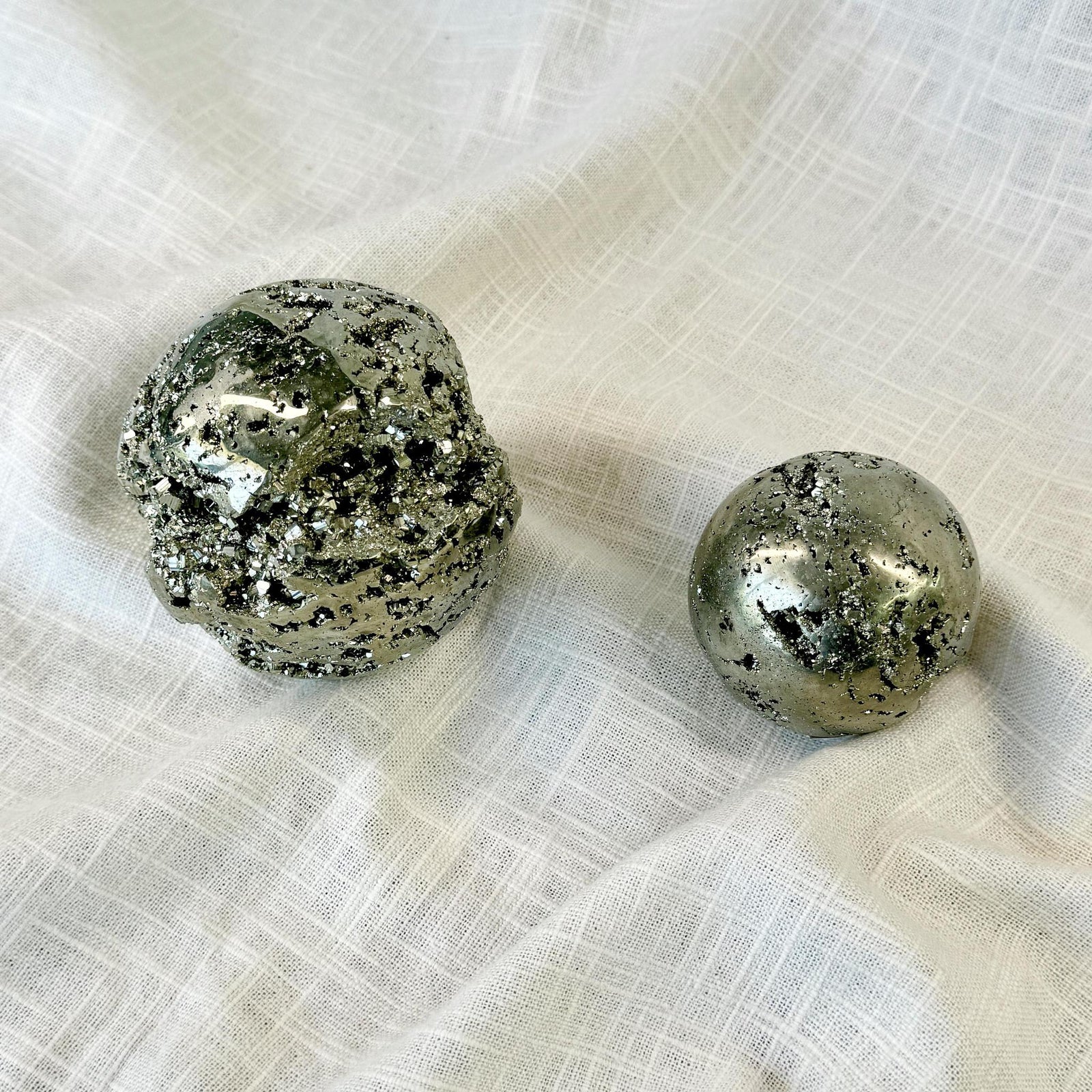
It catches light like metal because it basically is metal, iron and sulfur locked into little cubes so precise they look cut by hand. They aren't. That's just how pyrite grows.
Physical Properties
- Appearance: brassy, metallic, pale gold. It forms in startlingly clean cubes, in clustered masses, and sometimes in flat round discs. The metallic shine is natural, not polished on.
- Composition: iron sulfide. The iron and sulfur together are what give it both the color and its one care quirk.
- Hardness: 6 to 6.5 on the Mohs scale, harder than most people expect from something that looks like soft metal.
- Origin: typically mined in Spain, Peru, and Italy. The famously perfect cubes come out of Spain.
Metaphysical Properties
Pyrite has a long reputation as a stone of confidence, will, and follow-through, the ally you reach for when the plan is fine but the momentum is missing.
Where it's useful: the start of a project. The day you have to advocate for yourself. Work you keep circling instead of finishing. It's tied to the solar plexus, the seat of personal power and gut-level yes, but you'll feel it more as a nudge toward action than as anything abstract.
It also carries an old association with abundance, less "money falls from the sky" and more "you do the work that earns it." Pyrite rewards effort, not wishing.
How to Use Pyrite
- On your desk: keep it in your line of sight where you work. This is the classic pyrite placement for a reason.
- In your pocket: carry a small piece on a day you have to be brave out loud.
- In a workspace or doorway: many people keep pyrite near the entrance of a shop or office as a steady, grounding presence for the space.
- For intention work: hold it while you name the concrete next action, not the big dream. Pyrite likes specifics.
Crystal pairings: Citrine when the goal is momentum and optimism together, Black Tourmaline for a grounded floor under ambitious work, Clear Quartz to sharpen a focused intention, Carnelian for creative drive.
Care and Maintenance
Pyrite has one real rule: keep it dry. Because it's iron sulfide, moisture and humidity can slowly oxidize it, and over time a wet-stored piece can dull, flake, or develop a rusty film. Don't cleanse it in water and don't leave it in a steamy bathroom or a damp windowsill.
Cleanse it with smoke, sound, or moonlight instead. Skip salt, which can corrode the surface. Wash your hands after handling rough pieces, store it somewhere dry, and it will hold its shine for years.
Shopping Guide
For a first piece, a rough cube or a small cluster shows off what makes pyrite pyrite, those natural metallic faces. Look for bright, even luster and intact edges rather than crumbly or dull spots. Raw pyrite is honest and inexpensive; you don't need a large piece for it to do its work on a desk. Pyrite is typically mined in Spain and Peru.
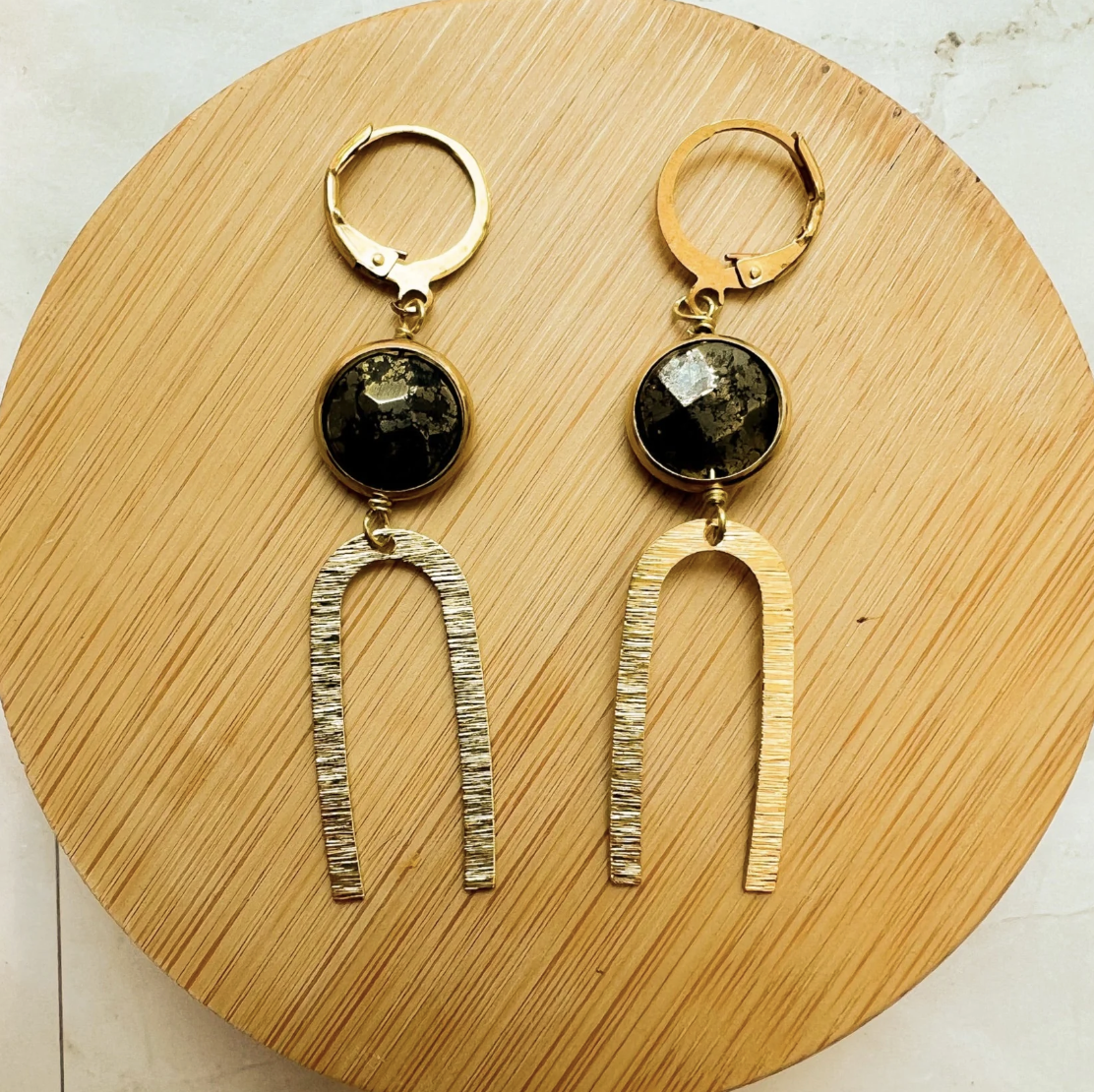
Here are some pieces that do this work well:
One small thing to try tonight
Set a piece of pyrite next to the one task you keep sliding to tomorrow. Don't do the whole task. Do the first five minutes of it, right now, with the stone where you can see it. Pyrite isn't magic. It's a small, bright reminder that you're the one who moves the thing.